
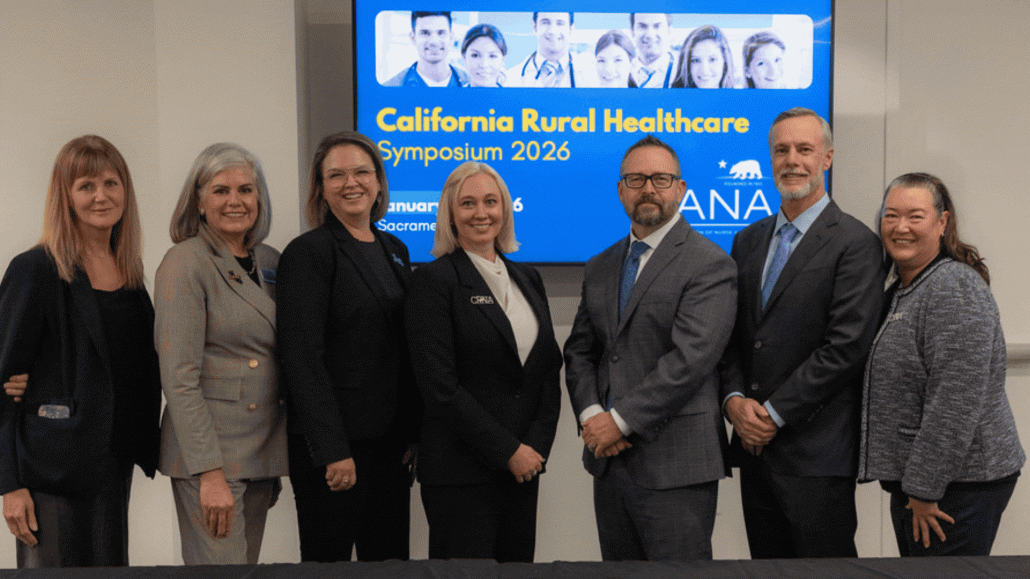
CANA hosts 2026 Rural Healthcare Symposium: Addressing Access, Workforce Sustainability, and Health Equity
Access a Free Recording of the Event Here
(Sacramento, CA) – Yesterday, the California Association of Nurse Anesthesiology (CANA) brought together legislators, health care experts, policymakers, and rural health stakeholders to examine one of California’s most pressing health system challenges: access to care in rural California.
“Rural health care has never been simple, but rural health care has always been resilient. These communities deserve the same access to safe, high-quality health care as any other part of California,” said Kristen Roman, DNAP, CRNA, President, CANA. “Today’s Rural Health Care Symposium underscored the urgent need for sustainable workforce solutions to better support rural facilities and the Californians who rely on them. As essential pieces to the puzzle, Certified Registered Nurse Anesthetists (CRNAs) maintain access to anesthesia and surgical services in many of these underserved regions.”
The all-day event, held during National CRNA Week (January 18-24) featured expert panels and briefings on the state of rural health care, federal and state policy developments, and the realities of providing obstetric, reproductive, and anesthesia care in rural communities.
“We’ve seen time and time again that when the hospital dies, the city dies. Considering 35% of U.S. community hospitals are rural, rely heavily on Medicare and Medicaid reimbursements, and are closing rapidly – with many on the brink of financial collapse – we’re inching closer to more cities dying,” said Tracy Paul Young, MSNA, MBA, CRNA, President-Elect, American Association of Nurse Anesthesiology (AANA). “California is a canary in the coal mine for the United States, how the State faces these budget challenges and funding will set the stage for the rest of the country, which his why it’s critical California continues investing in education for nursing and working toward the stabilization of reimbursement rates for providers in rural regions.”
Throughout the day, speakers addressed the complex challenges facing rural hospitals and clinics — along with collaborative, policy-driven solutions to ensure patients can receive safe, timely, high-quality care close to home.
“Those in metro areas worry about hospitals accepting their insurance — those in rural communities worry about just getting to a hospital,” said Assembly Minority Leader Heath Flora (R-Ripon), who authored CANA’s 2025 sponsored bill AB 876. “It is vital for us lawmakers to work together, on both sides of the aisle, to protect patients from unnecessary disruptions in care.”
“As the Assemblymember who represents 11 counties, I’m fighting to protect and expand access to care in our rural communities. That starts with growing our own healthcare workforce—investing in local training programs, career pipelines, and education opportunities so people can live, learn, and serve where they’re needed most,” said Assemblymember Heather Hadwick Heather Hadwick (Alturas). “When we build strong pathways into healthcare careers right here at home, we strengthen access to care, support local economies, and ensure the long-term sustainability of rural healthcare for generations to come.”
“Let’s remember that one size doesn’t fit all for healthcare access.” said Assemblymember Cecilia Aguiar-Curry (D-Winters). “Our rural areas have different needs than our non-rural areas.”
“It’s impossible for the fourth largest economy in the world to say we don’t have any money. It’s not that we don’t have the money, it’s we don’t have the priorities,” said Assemblymember Corey Jackson, DSW, MSW (D-Moreno Valley). “It’s critical for Californians throughout the state to continue fighting for what you and your community need.”
The event also explored how team-based care models and workforce flexibility help maintain access to essential services.
“Where you live should not determine if you live,” emphasized Suzie Newell, DNP, CRNA, FAANA during the panel discussion with CRNAs and Certified Nurse Midwives (CNMs), “CRNAs and CNMs are in health settings to prevent crisis, and they’re very good at it.”
“Rural health is not for the faint of heart, but these rural providers continue to show up,” said Lauren Hill, Chief Administrative Officer, Glenn Medical Center in Willows, California. “In a metro area, if someone doesn’t show up for work, they have the staff to move around — we don’t have that in rural communities. If someone misses work, that hospital is missing that service.”
“We cannot afford for more rural hospitals to close,” said Mark Farouk, Vice President, State Advocacy, California Hospital Association. “When one hospital closes that trickles to other rural areas and then on to suburban areas and then into urban areas as patients scramble to find care — impacting the entire health care safety net.”
Through education, open dialogue, and cross-sector collaboration, the 2026 California Rural Health Care Symposium reinforced the critical role of policy alignment, workforce sustainability, and innovative care models in strengthening rural health systems.
“The hospital is the heartbeat of the community. The operating room is the heartbeat of the hospital,” Rod Hoover, DNAP, MS, CRNA, Lieutenant Commander, US Navy (ret.). “We serve on the frontline when and where we are needed, if we are not there, no one is there We can’t do this without their (the lawmakers’) support to fully back our mission to deliver access to care.”
“As we look ahead, CANA remains committed to working alongside legislators, providers, and community leaders to advance solutions that protect access to essential health care services and promote health equity for all Californians now and in the future,” concluded Kristen Roman, DNAP, CRNA, President, CANA.
You can view a full recording of the event and panels HERE.
About the California Association of Nurse Anesthesiology
The California Association of Nurse Anesthesiology (CANA) represents CRNAs across the state. Since 1931, CANA has provided leadership, advocacy, and education to advance patient safety and support the nurse anesthesia profession. Learn more at www.canainc.org.

