
What is a CRNA?
CRNAs, or nurse anesthesiologists, have been providing anesthesia to patients in the United States for more than 150 years. CRNAs are advanced practice registered nurses (APRNs) who have completed an accredited graduate level nurse anesthesia program and passed a national certifying examination; starting in 2025, CRNAs must graduate from an accredited Doctoral Nurse Anesthesiology Program.
Qualified to administer all types of anesthetics independently, CRNAs work in every setting in which anesthesia is delivered, including hospitals, ambulatory surgical centers and physician/dental offices. CRNA services include pre-anesthesia evaluation, administering the anesthetic, monitoring and interpreting the patient’s vital signs and managing the patient throughout surgery. In California, CRNAs are the sole anesthesia providers in 4 counties, and the primary provider in most rural areas, ensuring patient access to obstetrical, surgical, trauma stabilization and pain management services.
The California Association of Nurse Anesthesiology (CANA) is the definitive source of leadership, advocacy and education for the CRNAs of California.
CRNA Quick Facts
In California, Certified Registered Nurse Anesthetists (CRNAs) have practiced independently - without physician supervision - for decades. They administer every type of anesthesia in any health care setting.
Countless studies find CRNAs as safe and effective as physician anesthesiologists, including when practicing independently and in complex cases.
CRNAs are extensively educated, advanced practice registered nurses specializing in anesthesia care.
Minimum of 7 - 8½ yrs of education & training specific to nursing & anesthesiology before CRNAs are licensed to practice anesthesia.
Starting in 2025, CRNAs must possess a Doctoral Degree from a COA-accredited nurse anesthesia educational program.
CRNAs must pass a National Certification Examination for entry into practice and be re-certified every 4 years.
CRNAs obtain an average of 9,369 clinical hours of training prior to becoming a CRNA.
As the demand for care grows, increasing the number of CRNAs will be key to containing costs while maintaining quality care.
Did You Know?
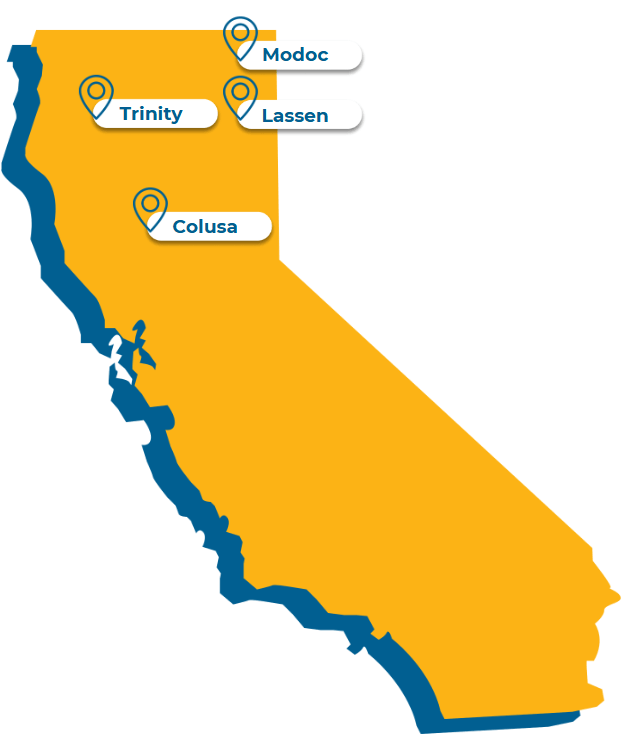
CRNAs are the sole anesthesia providers in 4 rural counties in California, and provide more than 80% of rural anesthesia nationwide.
- Four California counties (7%) rely solely on CRNA
anesthesia services: Colusa, Lassen, Modoc, and Trinity.
-
CRNAs administer anesthesia independently of physician
anesthesiologists in all practice settings in the 51 counties
(94%) where surgical, obstetric and trauma services are
provided.
-
Four counties do not currently offer any anesthesia
services (Alpine, Glenn, Mariposa, and Sierra).
Frequently Asked Questions
Trailblazers in Pain Management
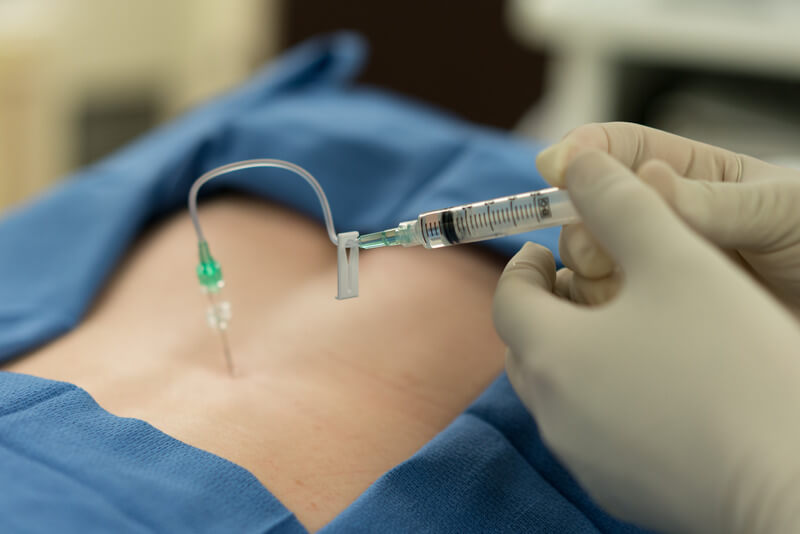
Surgical or chronic pain can be managed without opioids. CRNAs are trailblazers in this form of anesthesia care.
By virtue of education and individual clinical experience and competency, a CRNA may practice chronic pain management utilizing a variety of therapeutic, physiological, pharmacological, interventional, and psychological modalities in the management and treatment of pain.
Resources
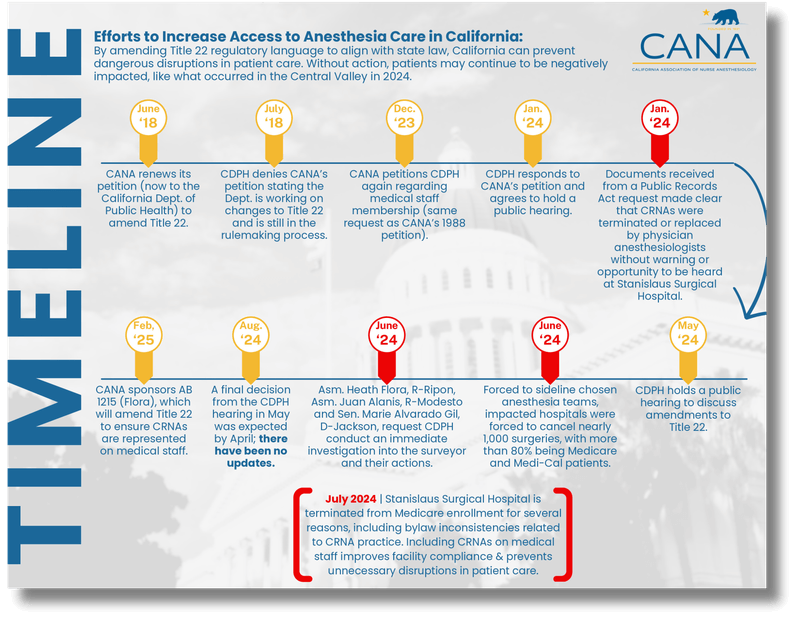
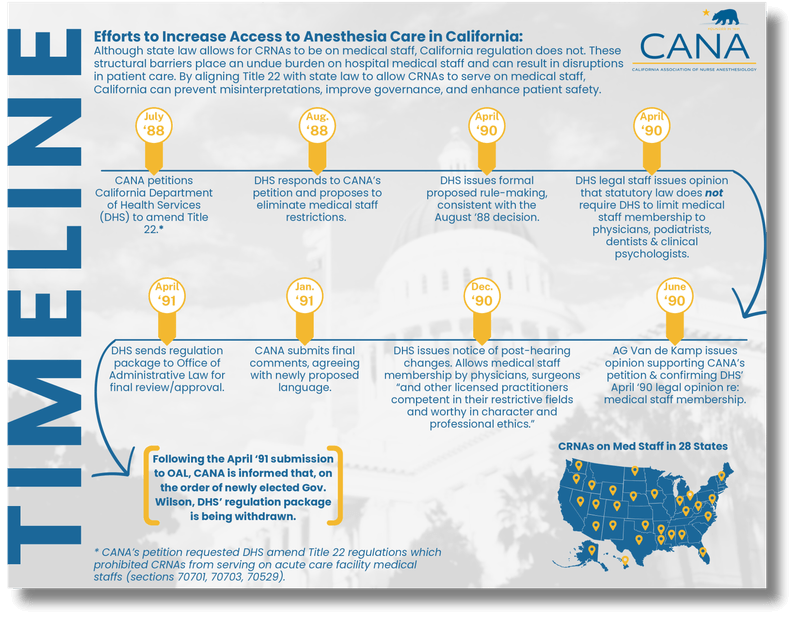
Addressing
Addressing
CANA's 2025
Title 22
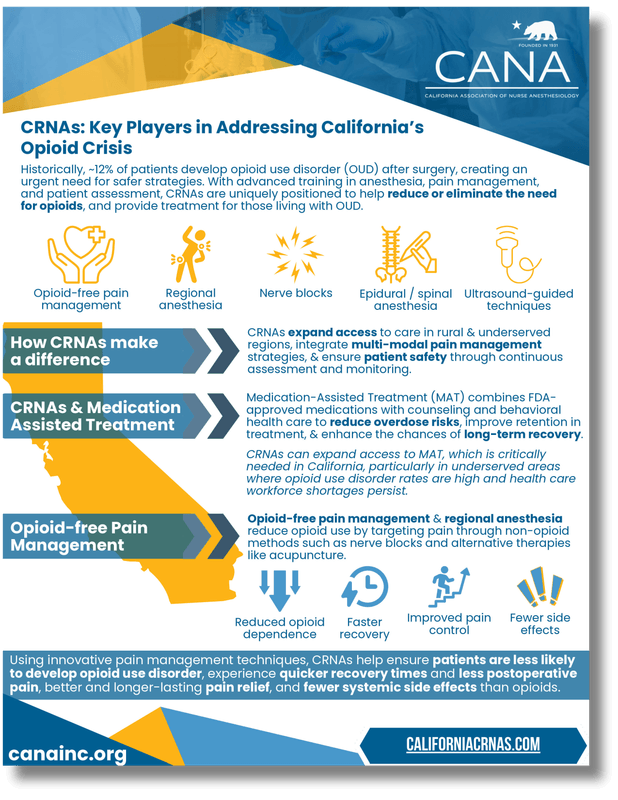
CA's Opioid Crisis
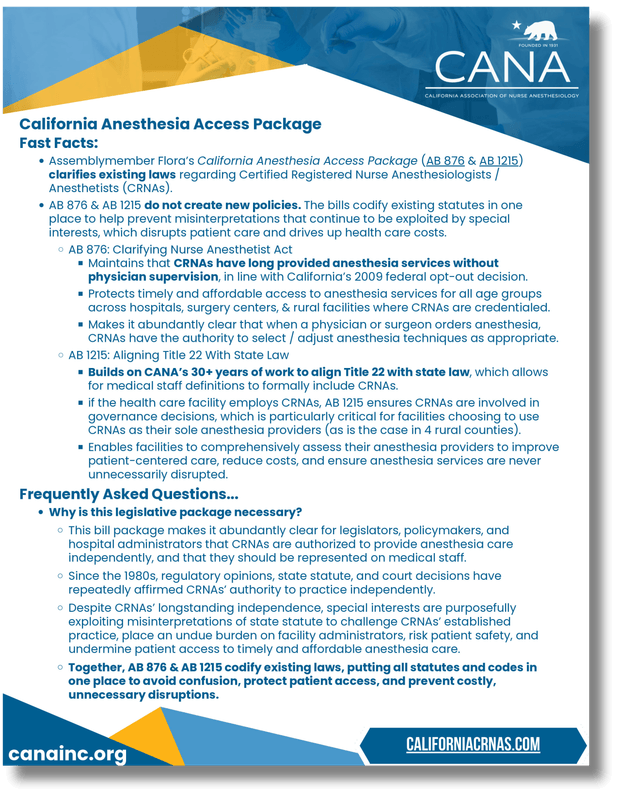
Legislative Package
30+ Years of Advocacy



CRNA
Changing
Education
Fast Facts
Landscape
& Training